Qualities And Skills Required To Be A Solar Electrician
In Australia, the solar industry is booming, and workers are constantly required all over the country. Solar electricians play one of the most important parts in the whole process.
Solar electricians help to construct, install, and repair active systems. Australia uses the most solar energy per capita in the world with 810W per person. In 2020, there were 378,451 rooftop solar installations, the highest number in the industry’s history. As a result, the industry added 3 GW of new capacity in 2020, easily surpassing the previous high of 2.2 GW in 2019.
Quick Summary: Solar Electrician Skills
The Australian solar industry is growing rapidly. To transition into this specialized field, you need a mix of technical mastery and physical readiness:
- • Technical: Proficiency in math, physics, and low-voltage wiring circuits.
- • Physical: Capability to climb ladders and lift panels weighing 18-25kg.
- • Mental: High attention to detail for troubleshooting complex setups.
- • Tech-Savvy: Keeping up with evolving battery and inverter specs.
- • Soft Skills: Clear communication with site owners and co-workers.
- • Credentials: A valid Electrical Licence and specialized Solar Training.

Small-scale solar (systems up to 100 kW) accounted for 23.5% of Australia’s clean energy generation and 6.5% of the total electricity production in 2020.
Those statistics illustrate the fact that Australia has become a major player in the global solar industry. Solar energy will keep being widely used in the future and this will keep creating numerous job opportunities.
Data sources: Clean Energy Council and Wikipedia
We have put together a list of the most important qualities and skills for becoming a solar electrician.
1. An understanding of fundamental electrical systems
You must understand basic math, and basic physics and have some knowledge of electrical systems including:
- Installing low-voltage wiring, accessories, and appliances.
- Identifying and connecting the electrical circuits.
- Resolving issues with electrical equipment.
In Australia, if you want to start your career as a solar electrician, you should have a valid electrical licence and a Certificate III in Electrotechnology and undertake solar training.

2. Physical and mental skills
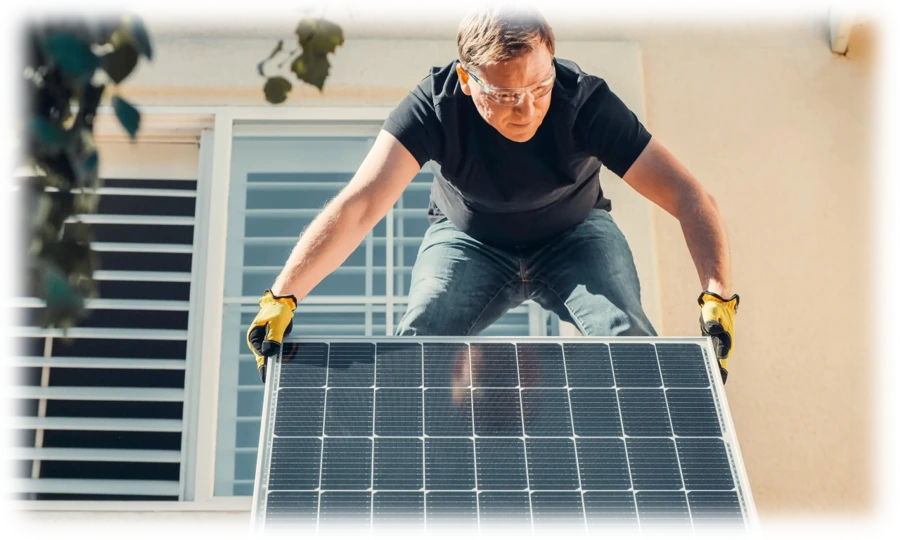
Physical skills: Working as a solar technician requires good physical abilities. Workers can expect to be on their feet most of the day, carrying heavy equipment and climbing ladders. It is critical to be able to lift solar panels, which can weigh up to 18-25 kilos and must fit into narrow areas.
Mental skills: Solar technicians must have an eye for detail as well as the ability to follow particular supervisory directions. Failure to follow proper protocols may fail the solar installation. A typical solar electrician’s day involves installing, repairing, or maintaining complex equipment. It’s important to be able to troubleshoot problems and work both independently and cooperatively. Solar equipment and setup can be complicated to comprehend and require electricians to be alert and focused at all times to avoid making mistakes.
3. Tech Savvy
The solar industry evolves extremely quickly. Solar energy, thanks to technical improvements, remains competitive in terms of cost when you compare it to other sources of energy generation. A good solar installation technician needs to be tech-savvy to keep up with an industry that is constantly changing and upgrading strategies. This entails keeping up with solar-related news and studying the specification sheets of new solar panels, batteries, or inverters with which they may be unfamiliar. Solar electricians should also be aware of all the different options available so that they can provide suitable advice to customers. Being tech-savvy and on top of innovations in the industry will enable solar electricians to be ahead of the game and provide the best advice and service to customers.
4. Good communication skills
Communication skills include the ability to convey a clear message through talking, writing, listening, and understanding what others say. All of these are essential communication elements in any occupation.
Solar Electricians need to interact with other professionals as well as customers including their bosses, co-workers, suppliers, site owners, and solar customers. When working on residential projects, technicians must be able to provide excellent customer service as they may need to enter the person’s home to diagnose a problem and set up follow-up appointments. With so much reliance on effective communication, this essential skill alone can make or break one’s career prospects.
5. Training
In Australia, to become a solar electrician, you should undergo solar training courses like
- Solar Design And Install Grid-Connected Photovoltaic Systems
- Solar Panel Installation – Grid-Connected Photovoltaic Systems
- Solar Design Grid-Connected Photovoltaic Systems
- Solar Battery Storage Course – Design & Install Battery Storage Systems For Grid-Connected Solar Photovoltaic Systems
- Solar Battery Installation – Install Battery Storage Systems For Grid-Connected Solar Photovoltaic Systems
- Solar Battery Design Storage Systems For Grid-Connected Photovoltaic Systems
To enrol in any of the courses, you must have the following qualifications:
- A valid Electrical Licence and a Certificate III in Electrotechnology
- A valid ID (e.g., Drivers Licence)
AUSINET provides a wide choice of specialty courses to help students achieve their career goals. We also provide RPL for candidates who meet the eligibility criteria. Our instructors have over 20 years of experience in the industry and can assist students in upskilling. We’ll help you opt for the most appropriate training course for your requirements.
Please email support@ausinet.com.au or call (08) 6244 2575 if you have any questions.
Last reviewed date: 04/05/2026


Leave a Reply